Improvements in Filtration Serving Clinker Cooling Equipment Can Reduce Environmental Impact and Contribute to More Sustainable Cement Operations.
By Keith Ogilvie and Michael Neate
Increasing capacity in cement plant baghouses has historically required major structural modification or full equipment replacement. Although effective, these approaches come with a significant environmental footprint. New construction involves high embodied carbon, additional raw materials and often requires extended shutdowns.
Retrofit-based approaches offer a much more resource-efficient alternative. Enhancing the performance of existing systems reduces pressure on finite resources while delivering measurable improvements in energy use and emissions.
Energy Efficiency As A Carbon Lever
Filtration systems play a central role in both emissions control and energy consumption. In many installations, elevated pressure drops and inefficient airflow distribution lead to increased fan energy demand and higher compressed air usage for cleaning cycles. Optimizing filtration performance by improving airflow dynamics and increasing effective surface area can significantly reduce these energy requirements. Lower system resistance reduces fan power consumption, while more efficient cleaning reduces compressed air demand.
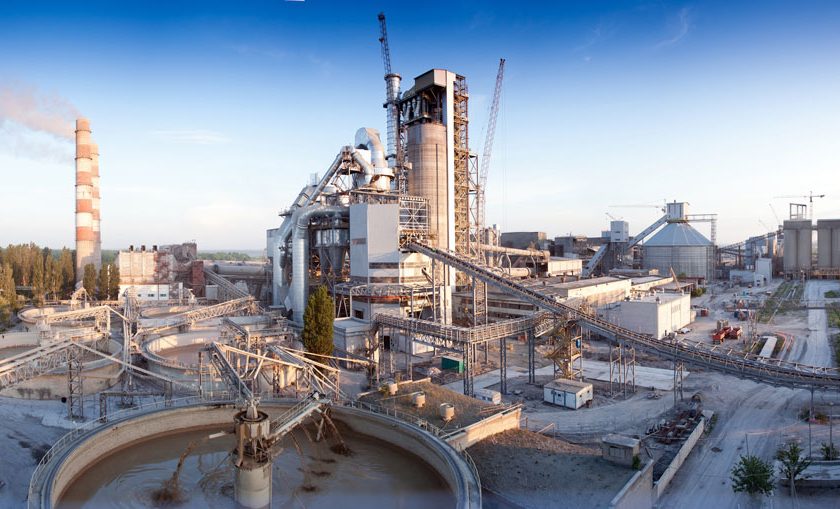
A recent retrofit project at a cement plant illustrates how these principles can be applied in practice. The plant’s clinker cooler baghouse had reached its operational limits and was unable to accommodate a planned increase in normal gas flow from 1,860 m3/minute to 2,312 m3/minute without risking higher emissions and process instability. A conventional upgrade would have required major structural modifications, involving significant downtime and cost.
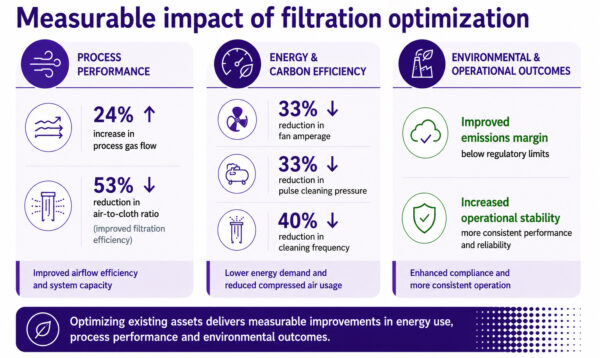
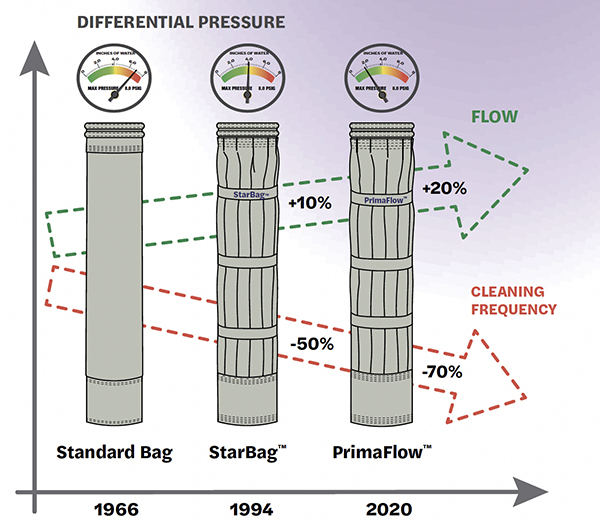
Following an assessment of the cement plant’s revised operational requirements, Cleanova proposed an alternative that avoided the construction of a new baghouse and all the associated disruption and environmental impacts. Instead, the existing system was optimized using PrimaFlow advanced filtration technology, increasing effective filtration capacity within the same footprint. This enabled a 25% increase in gas-handling capacity while reducing differential pressure and improving airflow distribution. As a result, the plant achieved lower fan energy consumption and reduced compressed air demand, alongside improved particulate emissions performance (Figure 1).
By avoiding large-scale reconstruction and reducing ongoing energy use, the upgrade delivered both immediate and longer-term environmental benefits, demonstrating how targeted asset optimization can support decarbonization in practice.
Increasing Output Without Increasing Impact
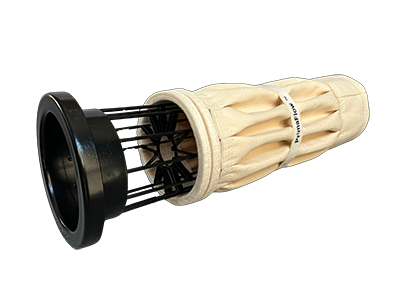
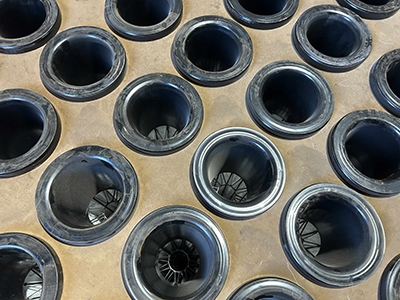
PrimaFlow is one example of recent advances in filtration technology that now make it possible to increase gas-handling capacity within the existing footprint, while maintaining or improving particulate capture performance (Figure 2). By effectively increasing filtration area and improving flow distribution, plants can handle higher volumes without exceeding emissions limits.
Stability As A Sustainability Metric
While emissions reduction and lower energy consumption are central to environmental performance and sustainability metrics, process stability is an equally important—if less visible—factor. Unstable filtration systems can lead to fluctuating pressure conditions, inefficient cleaning cycles and increased wear on components. These effects not only reduce system efficiency but can also result in emissions variability and unplanned maintenance interventions.
A stable, well-balanced system reduces these risks. Consistent pressure profiles and optimized cleaning cycles minimize the potential for wasting energy, extend component life and ensure reliable emissions performance (Figure 3). In this context, operational stability contributes to sustainability, reducing both direct and indirect environmental impacts.
Extending Lifecycle, Reducing Resource Use
Efficiency improvements also have important implications for equipment lifecycle and resource consumption. By reducing mechanical stress on filter media and associated components, optimized systems extend service life and reduce replacement frequency. Fewer filter changeouts equate to lower material consumption and reduced waste generation over the operational lifecycle. Such outcomes align with circular economy principles, supporting more sustainable use of resources and reducing the overall carbon footprint of industrial equipment.
Delivering Impact At Pace
As the pressure to decarbonize heavy industry intensifies, effective solutions that can be implemented quickly are becoming increasingly valuable. Retrofit-based efficiency improvements can often be deployed within routine maintenance windows, avoiding the extended downtime associated with major rebuilds (Figure 4). This enables plants to realize environmental benefits sooner, reducing energy consumption and emissions in the near term, and allowing longer-term strategies to be developed.
Filtration-Sustainability Link
Within the broader sustainability landscape, filtration systems occupy a unique position. They are directly linked to emissions control, energy consumption and operational efficiency — three critical facets of environmental, social, and governance performance.
Advances in filtration design are enabling plants to achieve significant improvements without structural change. By enhancing airflow management, increasing effective filtration area and optimizing system behavior, modern solutions can simultaneously deliver lower energy use, improved emissions control and greater operational stability. Filtration is therefore evolving from a compliance function to a strategic enabler of sustainable performance, supporting the transition towards lower-carbon, more resource-efficient operations.
Respectively based in Virginia and Australia, Keith Ogilvie is technical director and Michael Neate is global technical and applications manager for Cleanova in Chattanooga, Tenn.; www.cleanova.com.